seedlookout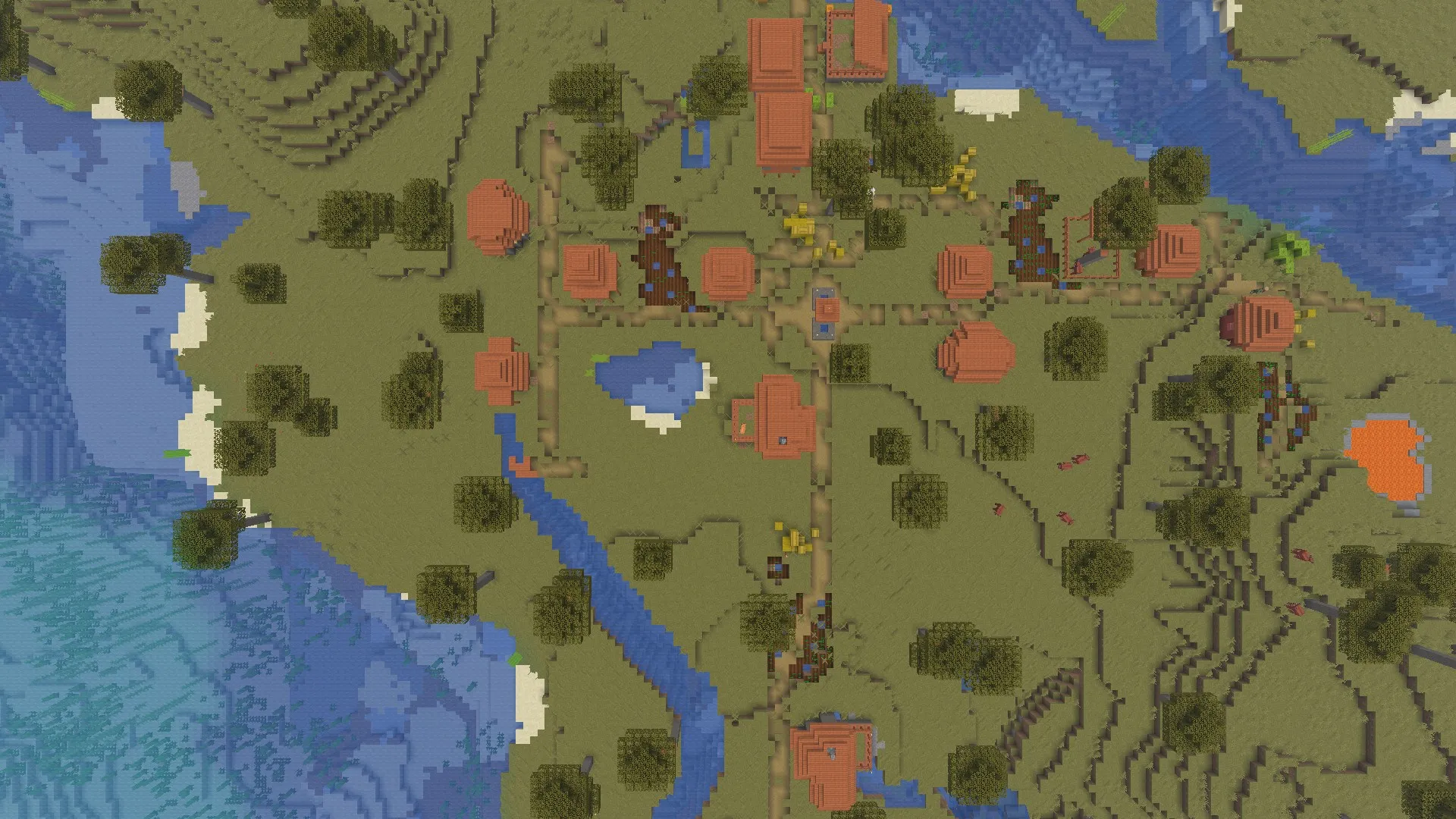
What are the chances that you actually spawn inside a village? We have not measured that probability in the game yet. This study measures how often a predicted village marker falls close to estimated world spawn.
Java 26.3 is the latest stable Java release on 1 October 2026. These figures apply to its default world generation.
What we measured
Our primary sample covered 1,000,000 pseudo-random numeric seeds across the signed 64-bit range, measuring horizontal distance from estimated spawn to the nearest village marker that passed the model’s biome checks. Blank-seed generation and text-seed choices were not studied. We included abandoned villages.
Results
Our primary Java 26.3 model sample predicts a village marker within 64 blocks of estimated world spawn in about 0.94% of numeric seeds, or 1 in 107. Starting among buildings depends on village layout and your actual first position.
| Village marker within | Seeds matching | Primary estimate |
|---|---|---|
| 16 blocks | 1,431 | 0.14% |
| 32 blocks | 3,138 | 0.31% |
| 64 blocks | 9,379 | 0.94% |
| 128 blocks | 32,349 | 3.23% |
| 256 blocks | 156,708 | 15.67% |
| 512 blocks | 545,891 | 54.59% |
These rates are cumulative: a match within 32 blocks also counts within 64.
The 64-block result has a Wilson 95% sampling interval of roughly 0.92% to 0.96%, treating the pseudo-random inputs as uniform draws. It excludes model errors.
We ran three repeat samples, each with 1,000,000 new numeric seeds. At 64 blocks their counts were 9,379, 9,535 and 9,465. Their mean is 0.9460% ± 0.0045 percentage points (mean ± SEM, N = 3). The primary sample stays separate. All runs use the same generation model.
SEM is the sample SD of the three repeat rates divided by √3. We assume independent pseudo-random samples; disjoint seed sets alone do not establish independence. With only three repeats, SEM is imprecisely estimated. It describes sampling stability, excludes shared-model error, and is not a 95% confidence interval.
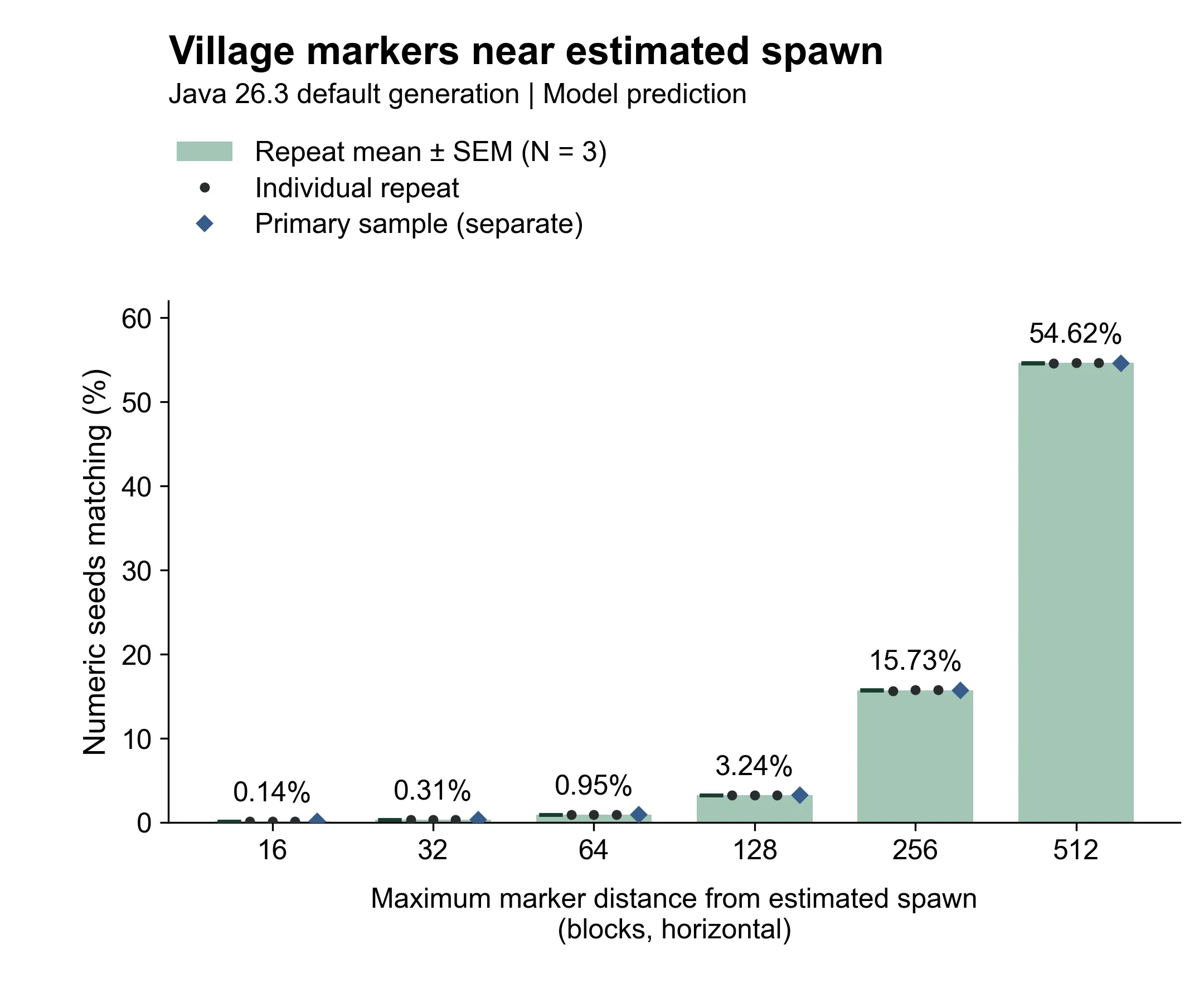
Figure 1. Three-repeat mean ± SEM; dots show repeats and diamonds the separate primary. Each run used 1,000,000 seeds. Thresholds overlap; do not add. SEM excludes model error and is not a 95% interval. Counts and Wilson intervals (CSV), repeat means and SEM (CSV).
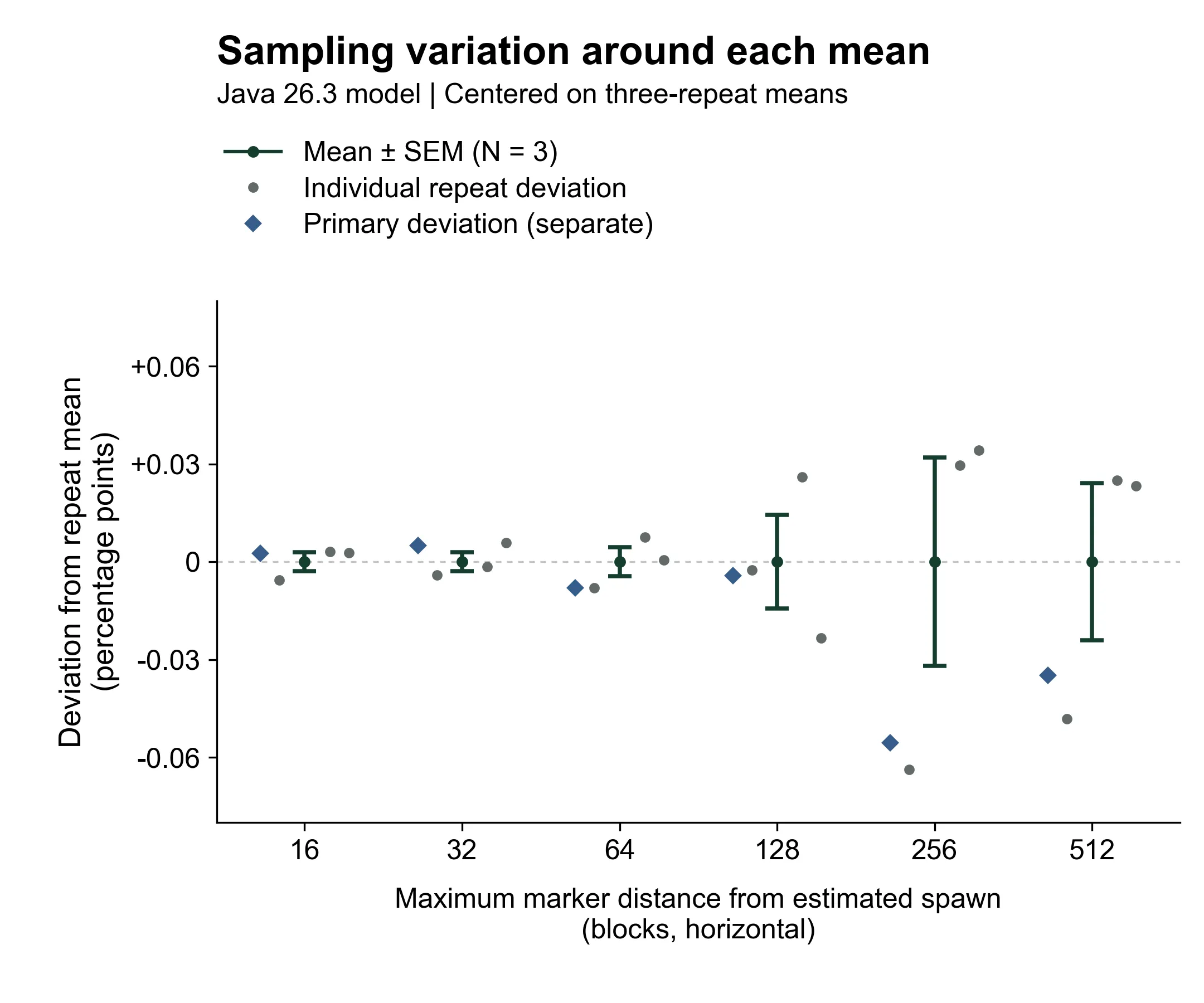
Figure 2. Each radius is centered on its three-repeat mean, with −SEM and +SEM caps. The axis shows percentage-point deviations; negative values are not negative probabilities. Each run used 1,000,000 seeds. SEM excludes model error.
Our study method and provenance (JSON) link the fixed protocol, source revisions and recorded data. Agreement between model implementations checks consistency, not accuracy against the game.
Does that mean you spawn inside the village?
Drawing a 64-block circle around each marker makes the counted event “estimated spawn lies inside that circle.” It is a geometric illustration of the proximity threshold. We did not measure village footprints, and the circle gives no measured probability of starting among real buildings or paths.
Real villages spread through buildings and paths. A marker does not describe that layout, and estimated spawn may differ from your character’s first position. Terrain and later generation steps can also affect structures. Our accuracy guide explains these limits. The population’s in-game inside-village rate remains unmeasured.
Three starting positions in Java 26.3
Each illustrated seed had a predicted marker 16 blocks from estimated spawn. In one fresh world per seed, the first position was among village buildings and paths. These selected examples establish neither a population rate nor a guaranteed starting block.
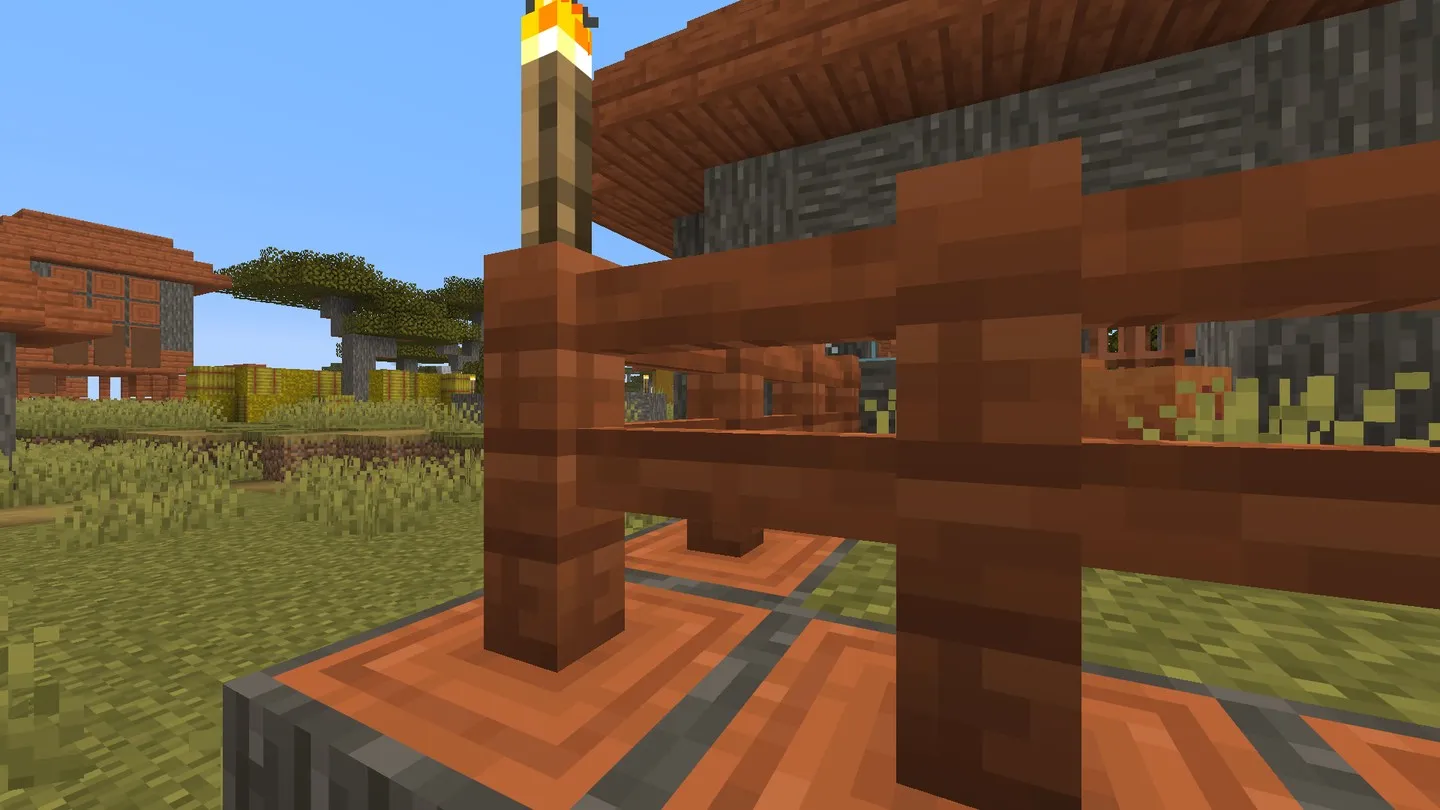
Savanna village: seed 2098594625401166349. Starting block in this check: X -1, Y 63, Z 8.
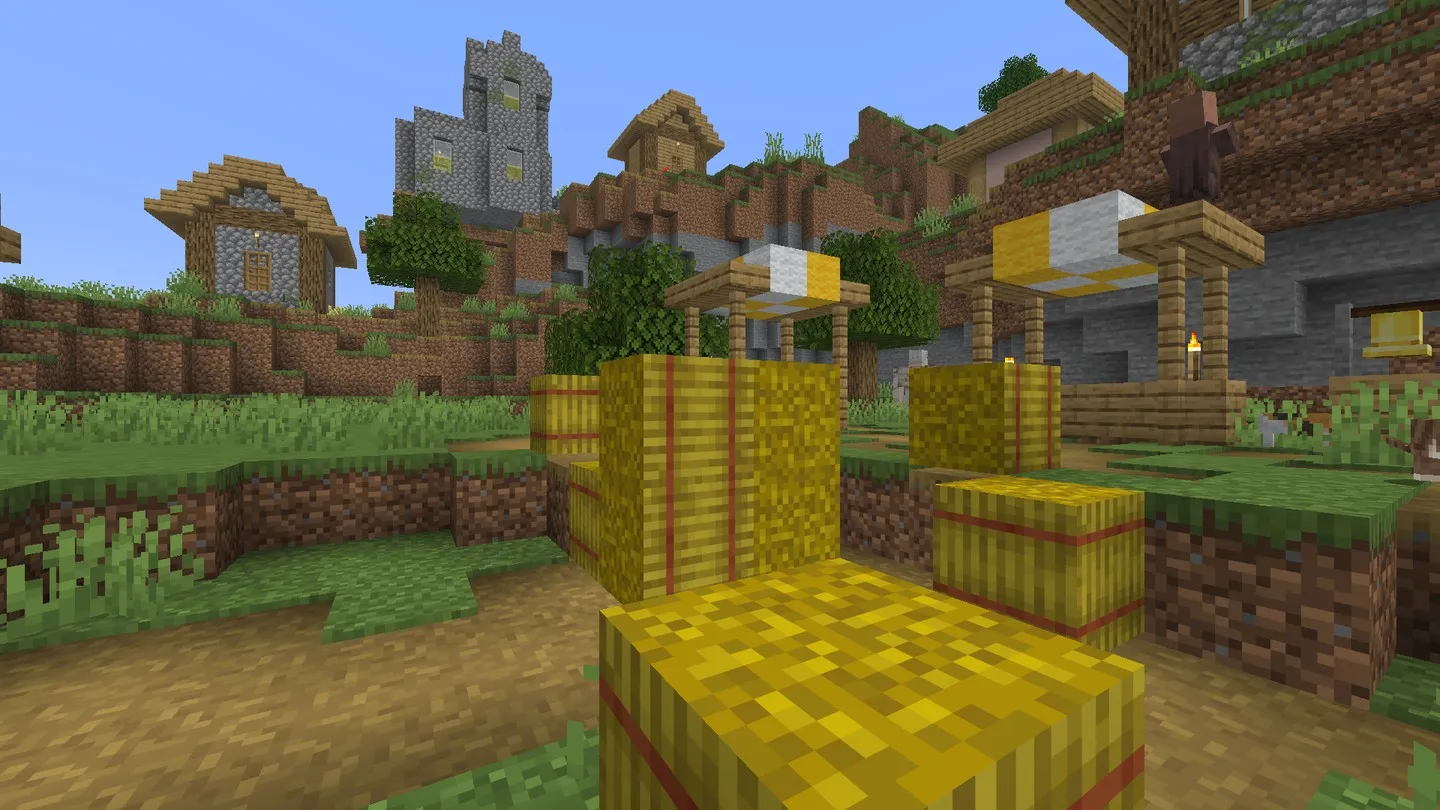
Plains village: seed -2608443705072891015. Starting block in this check: X 6, Y 78, Z 5.
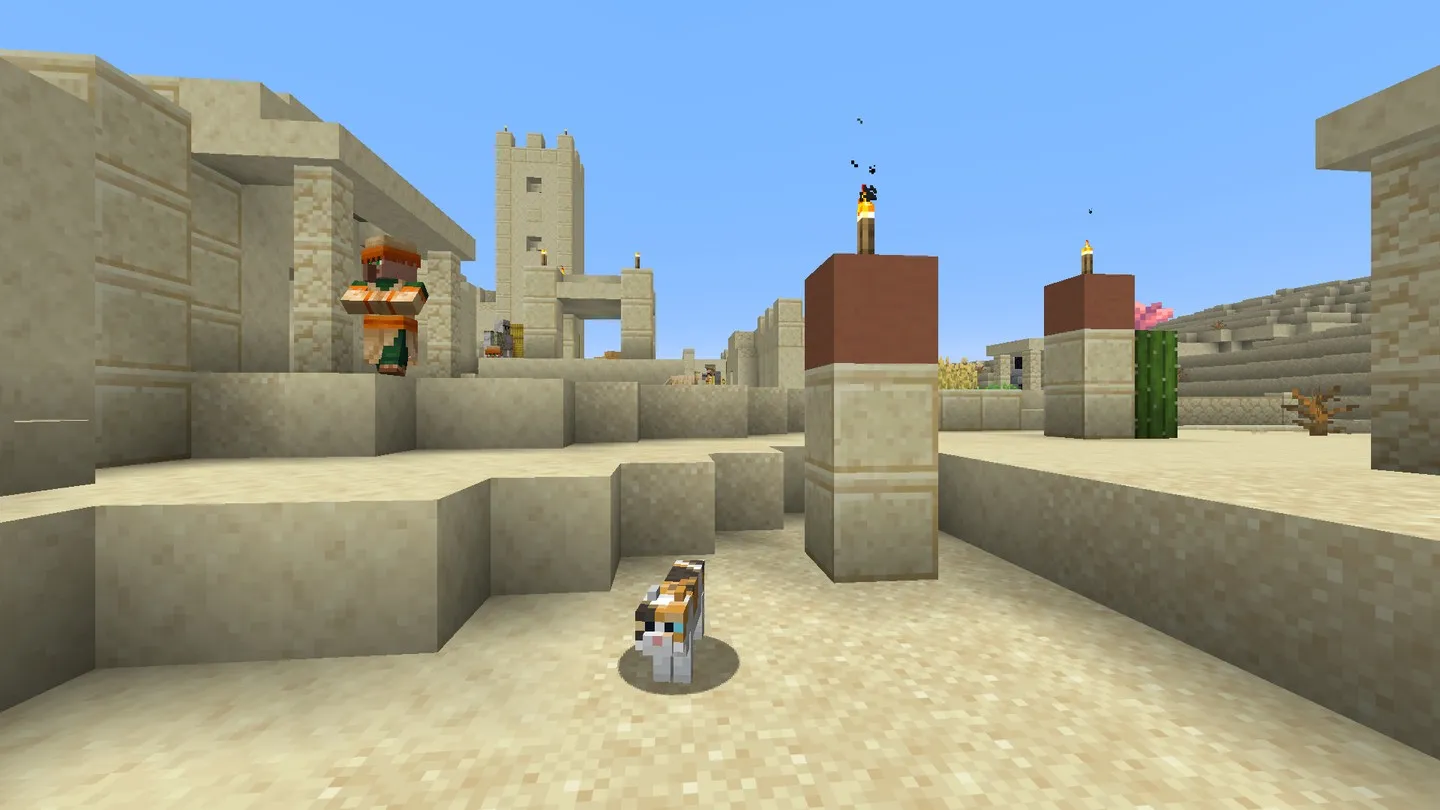
Desert village: seed 2296403535492355971. Starting block in this check: X -3, Y 73, Z 56.
Conclusion
The three repeat samples gave similar proximity rates, so the estimate was consistent across these runs of the model. We still do not have a measured chance of starting inside a village. The screenshots show three selected starts among buildings and paths; they cannot tell us how often that happens.
Future direction
Our follow-up study will check randomly selected worlds in the game using a fixed definition of “inside a village.” The sample will include worlds without nearby village predictions. We will compare actual starting positions with generated buildings and paths, then report how well marker proximity predicts starting inside.
Find a village for your next world
Use the village finder with Java 26.3 to find predictions near spawn. Our village reference explains generation and variants. Check your starting position in a fresh world.